WORKS | PROJECTS
orchestra
Symphony for orchestra (2025)
3 fl, 3 ob, 3 cl, 3 bsn, 4 hn, 3 tpt, 3 tbn, 1 tba, 4 perc, 1 hp,
vln I (12), vln II (10), vla (8), vc (6), db (4)
The piece was written as part of the composer’s doctoral dissertation project.
Symphony is an approximately 27-minute composition for orchestra. The work employs techniques such as imitating the sounds of animals and natural phenomena.
Its harmonic language is based on pitch centers as well as on pitches derived from the multifonic sonorities of the bass clarinet.
The piece was written as part of the composer’s doctoral dissertation project.
Symphony is an approximately 27-minute composition for orchestra. The work employs techniques such as imitating the sounds of animals and natural phenomena.
Its harmonic language is based on pitch centers as well as on pitches derived from the multifonic sonorities of the bass clarinet.
Fire for orchestra (2024)
3 fl, 3 ob, 3 cl, 3 bsn, 4 hn, 3 tpt, 3 tbn, 1 tba, 4 perc,
vln I (12), vln II (10), vla (8), vc (6), db (4)
world premiere: Warsaw, 20.09.2024, NOSPR, Yaroslav Shemet, Warsaw Autumn, Filharmonia Narodowa
The piece is inspired by the observation of matter undergoing changes during the process of increasing temperature and combustion. References to the action of fire can be interpreted in many ways.
The multitude of unspeakable connections in the interpretative space between listener, performer and composer is certain and unpredictable, regardless of the content of the work’s description.
Some will see it as a symbolism of purification or change, others will find references to destruction, degradation, environmental change, fear of war or burnout in given social functions; others yet will enrich the perception of the composition with their own insights.
world premiere: Warsaw, 20.09.2024, NOSPR, Yaroslav Shemet, Warsaw Autumn, Filharmonia Narodowa
The piece is inspired by the observation of matter undergoing changes during the process of increasing temperature and combustion. References to the action of fire can be interpreted in many ways.
The multitude of unspeakable connections in the interpretative space between listener, performer and composer is certain and unpredictable, regardless of the content of the work’s description.
Some will see it as a symbolism of purification or change, others will find references to destruction, degradation, environmental change, fear of war or burnout in given social functions; others yet will enrich the perception of the composition with their own insights.
Frost for orchestra (2023)
2 fl, 2 ob, 2 cl, 2 bsn, 2 hn, 2 tpt, 2 tbn, 1 tba, 1 perc, 1 hp,
vln I (10), vln II (8), vla (6), vc (4), db (3)
world premiere: Cologne, 17.01.2024, WDR Sinfonieorchester, Johannes Kalitzke
Frost is an orchestral composition inspired by the natural phenomenon of frost. Frost occurs at temperatures below 0°C (the freezing point of water), when water changes its state from liquid to solid.
This transformation has significant effects on all living organisms, which mostly consist of fluids in various forms. To cope with the impact of low external temperatures on their bodies, some creatures have developed the ability to hibernate during winter. However, modern humans do not enter hibernation during the cold months and are exposed to the harshness of winter. The sensation of cold and the human body's limited resilience to prolonged cold and frost were the main sources of inspiration for the layers of sound in this piece.
world premiere: Cologne, 17.01.2024, WDR Sinfonieorchester, Johannes Kalitzke
Frost is an orchestral composition inspired by the natural phenomenon of frost. Frost occurs at temperatures below 0°C (the freezing point of water), when water changes its state from liquid to solid.
This transformation has significant effects on all living organisms, which mostly consist of fluids in various forms. To cope with the impact of low external temperatures on their bodies, some creatures have developed the ability to hibernate during winter. However, modern humans do not enter hibernation during the cold months and are exposed to the harshness of winter. The sensation of cold and the human body's limited resilience to prolonged cold and frost were the main sources of inspiration for the layers of sound in this piece.
Defense mechanisms for clarinet, percussion and orchestra (2020)
clarinet/bass clarinet, percusion solo: 3 timpani (F, F, G), 3 singing bowls, vibraphone, crotales (one octave), drumset
2 fl, 2 ob, 2 cl, 2 bsn, 2 hn, 2 tpt, 1 tbn, 1 perc (2 timpani, bass drum, tam-tam), vln I (6), vln II (5), vla (3), vc (3), db (3)
wolrd premiere: Lüneburg, 22.10.2020, Broken Frames Syndycate, Lüneburger Phliharmoniker
defense mechanisms
The piece consists of 365 measures. This number symbolizes the days in a year. I analyzed my entire year "2019" by recording the defense mechanisms I observed in myself and the situations in which they arose, which later served as inspiration for writing the piece. When it comes to the theme of defense mechanisms, many questions and musical inspirations emerge. In the piece, you witness behaviors that suggest an attempt to defend oneself. How do we use defense mechanisms every day to cope with reality? How do we deal with our thoughts? Are we enough sensitive to what is happening around us? Do we sometimes wish to know nothing about the problems of this world? In the piece “Defense Mechanisms”, I want to pose such questions to the listeners.
2 fl, 2 ob, 2 cl, 2 bsn, 2 hn, 2 tpt, 1 tbn, 1 perc (2 timpani, bass drum, tam-tam), vln I (6), vln II (5), vla (3), vc (3), db (3)
wolrd premiere: Lüneburg, 22.10.2020, Broken Frames Syndycate, Lüneburger Phliharmoniker
defense mechanisms
The piece consists of 365 measures. This number symbolizes the days in a year. I analyzed my entire year "2019" by recording the defense mechanisms I observed in myself and the situations in which they arose, which later served as inspiration for writing the piece. When it comes to the theme of defense mechanisms, many questions and musical inspirations emerge. In the piece, you witness behaviors that suggest an attempt to defend oneself. How do we use defense mechanisms every day to cope with reality? How do we deal with our thoughts? Are we enough sensitive to what is happening around us? Do we sometimes wish to know nothing about the problems of this world? In the piece “Defense Mechanisms”, I want to pose such questions to the listeners.
binaural beats for symphony orchestra (2018)
2 fl, 2 ob, 2 cl, 2 bsn, 4 hn, 2 tpt, 3 tbn, 1 tba, 2 perc, 1 hp, 1 pno,
vln I (10), vln II (8), vla (6), vc (5), db (4)
world premiere: Warsaw, 09.06.2019, Polish Radio Symphony Orchestra, Piotr Zabielski
binaural beats is inspired by the phenomena of binaural beats and isochronic tones, though it does not aim to replicate them literally. Binaural beats occur when two slightly different frequencies are presented separately to each ear, creating the perception of a rhythmic pulse — a concept often linked to meditative brain states. Isochronic tones, on the other hand, are evenly spaced rhythmic pulses of a single tone that can promote focus or relaxation. In this composition, these ideas serve as a point of departure: their principles are translated into orchestral texture and spatial arrangement. To evoke the sensation of shifting frequencies, the double basses are placed on opposite sides of the stage, creating a dialogue that mirrors the binaural concept in an acoustic, concert-hall setting.
world premiere: Warsaw, 09.06.2019, Polish Radio Symphony Orchestra, Piotr Zabielski
binaural beats is inspired by the phenomena of binaural beats and isochronic tones, though it does not aim to replicate them literally. Binaural beats occur when two slightly different frequencies are presented separately to each ear, creating the perception of a rhythmic pulse — a concept often linked to meditative brain states. Isochronic tones, on the other hand, are evenly spaced rhythmic pulses of a single tone that can promote focus or relaxation. In this composition, these ideas serve as a point of departure: their principles are translated into orchestral texture and spatial arrangement. To evoke the sensation of shifting frequencies, the double basses are placed on opposite sides of the stage, creating a dialogue that mirrors the binaural concept in an acoustic, concert-hall setting.
relaxation music for orchestra (2018)
1 fl, 2 ob, 1 perc (singing bowls and timpani),
vln I, vln II, vla, vc, db
world premiere: Gdańsk, 25.11.2018, Sinfonietta Pomerania, Tadeusz Dixa
relaxation music for chamber orchestra is conceived as a form of meditative, relaxing music. It is written for flute, oboe, percussion (including Tibetan bowls placed on timpani), and string orchestra. The piece unfolds through a repetitive structure, gradually expanding and contracting its harmonic patterns. These subtle shifts in resonance and texture aim to create a sense of spaciousness and calm, inviting the listener into an immersive, contemplative sound world.
world premiere: Gdańsk, 25.11.2018, Sinfonietta Pomerania, Tadeusz Dixa
relaxation music for chamber orchestra is conceived as a form of meditative, relaxing music. It is written for flute, oboe, percussion (including Tibetan bowls placed on timpani), and string orchestra. The piece unfolds through a repetitive structure, gradually expanding and contracting its harmonic patterns. These subtle shifts in resonance and texture aim to create a sense of spaciousness and calm, inviting the listener into an immersive, contemplative sound world.
Concerto for clarinet and orchestra (2017)
1 fl, 2 ob, 2 cl, 2 sax, 2 bsn, 1 perc, 3 perc, 1 pno, 1 acc,
vln I, vln II, vla, vc, db
world premiere: Białystok, 14.03.2017, Karel Dohnal (clarinet), Tadeusz Karolak (conductor), Chopin University Orchestra
Concerto for clarinet and orchestra lasts approximately 20 minutes and features a virtuosic and demanding solo part. Composed by a clarinetist, the work reflects the composer’s deep familiarity with the instrument: its technical possibilities, expressive range, and potential for extended techniques.
world premiere: Białystok, 14.03.2017, Karel Dohnal (clarinet), Tadeusz Karolak (conductor), Chopin University Orchestra
Concerto for clarinet and orchestra lasts approximately 20 minutes and features a virtuosic and demanding solo part. Composed by a clarinetist, the work reflects the composer’s deep familiarity with the instrument: its technical possibilities, expressive range, and potential for extended techniques.
Elegia for clarinet and orchestra (2014)
2 fl, 2 ob, 2 cl, 2 bsn, 2 hn, tpt, 1 tba, 2 perc,
vln I, vln II, vla, vc, db
world premiere: Białystok, 29.04.2014, Żaneta Rydzewska (clarinet), Krzysztof Kozakiewicz (conductor), Chopin University Orchestra
world premiere: Białystok, 29.04.2014, Żaneta Rydzewska (clarinet), Krzysztof Kozakiewicz (conductor), Chopin University Orchestra
ensemble
Superheroines for ensemble (2026)
fl/b fl, cl/b cl, hn, tpt, tbn, perc, vln I, vln II, vla, vc, db
world premiere: Cologne, 09.05.2026, Ensemble Musikfabrik, Acht Brücken Festival
Superheroines is inspired by the play Top Girls by Caryl Churchill, particularly its dialogues between women from different eras and backgrounds who speak about their experiences. In Superheroines, abstract inspirations incorporate musical structures reminiscent of the dialogues and emotional states of the characters.
world premiere: Cologne, 09.05.2026, Ensemble Musikfabrik, Acht Brücken Festival
Superheroines is inspired by the play Top Girls by Caryl Churchill, particularly its dialogues between women from different eras and backgrounds who speak about their experiences. In Superheroines, abstract inspirations incorporate musical structures reminiscent of the dialogues and emotional states of the characters.
eco stories for ensemble, electronics, video and plant installation (2025/2026)
fl/b fl, b cl, b sax, perc, vln, vla, vc
world premiere: Dublin, 10.04.2026, Spółdzielnia Muzyczna, Music Current
eco stories is a piece for ensemble, electronics, objects, video, and a plant installation. It consists of five parts, each inspired by different ecological issues.
1. Mechanics
2. Drifting
3. Urban Anthropocene
4. Recycled loops
5. CO2-based respiration
The piece can be performed in two versions. Version I, the full version, consists of 5 parts and lasts approximately 20 minutes. Version II, the shorter version, consists of parts I-III lasts approximately 13 minutes, and does not require a plant installation or a table with small instruments. Each part of the piece refers to a different aspect of human interference with the natural world.
world premiere: Dublin, 10.04.2026, Spółdzielnia Muzyczna, Music Current
eco stories is a piece for ensemble, electronics, objects, video, and a plant installation. It consists of five parts, each inspired by different ecological issues.
1. Mechanics
2. Drifting
3. Urban Anthropocene
4. Recycled loops
5. CO2-based respiration
The piece can be performed in two versions. Version I, the full version, consists of 5 parts and lasts approximately 20 minutes. Version II, the shorter version, consists of parts I-III lasts approximately 13 minutes, and does not require a plant installation or a table with small instruments. Each part of the piece refers to a different aspect of human interference with the natural world.
Top Five for ensemble and electronics (2025)
fl, b cl, perc, acc, vln, vla, vc, db
world premiere: Warsaw, 18.10.2025, Hashtag Ensemble, Cantus Ensemble
Top Five is a composition for ensemble and electronics.The main musical material of the piece is inspired by the lives of five outstanding women from culture and science. These are Marilyn Monroe, Hildegard of Bingen, Tamara Łempicka, Maria Skłodowska-Curie, and Wendy Carlos. In connection with references to their lives and work, noticeable are sonic analogies concerning their functioning as women, their professional activity, and the way they were perceived in society. Hence the following contexts appear: associations with addictions, bottles, glasses, pill containers, music boxes with the melody of Happy Birthday, as well as kissing sounds, hissing, and cheers (catcalling, fawning) (Monroe); attempts at meditation, anxieties, and migraine headaches as revelations (Hildegard of Bingen); research on substances, dissolving in water (Skłodowska); Wendy Carlos, cat lover and pioneer of electronic music; or Tamara Łempicka (the act of bringing a goose into salons as a gesture of wanting to impress, driving sports cars, or the use of Art Deco techniques – checkered patterns).
world premiere: Warsaw, 18.10.2025, Hashtag Ensemble, Cantus Ensemble
Top Five is a composition for ensemble and electronics.The main musical material of the piece is inspired by the lives of five outstanding women from culture and science. These are Marilyn Monroe, Hildegard of Bingen, Tamara Łempicka, Maria Skłodowska-Curie, and Wendy Carlos. In connection with references to their lives and work, noticeable are sonic analogies concerning their functioning as women, their professional activity, and the way they were perceived in society. Hence the following contexts appear: associations with addictions, bottles, glasses, pill containers, music boxes with the melody of Happy Birthday, as well as kissing sounds, hissing, and cheers (catcalling, fawning) (Monroe); attempts at meditation, anxieties, and migraine headaches as revelations (Hildegard of Bingen); research on substances, dissolving in water (Skłodowska); Wendy Carlos, cat lover and pioneer of electronic music; or Tamara Łempicka (the act of bringing a goose into salons as a gesture of wanting to impress, driving sports cars, or the use of Art Deco techniques – checkered patterns).
time crusher for clarinet, piano and violoncello (2025)
world premiere: Warsaw, 27.10.2025, Warsaw Trio, UMFC
time crusher is inspired by the process of overstimulating human attention, its reactions to scrolling, and the constant intake of fast-changing information.
time crusher is inspired by the process of overstimulating human attention, its reactions to scrolling, and the constant intake of fast-changing information.
Melodrama for recorder, flute, harp, harpsichord and electronics (2025)
world premiere: Vienna, 21.06.2025, airborne extended, Reaktor Wien
Melodrama is an energetic eight‑minute work for recorder, flute, harp, harpsichord, and electronics. In this piece, the composer explores extreme emotional states — screaming, laughter, crying, mumbling, hysteria, delirium, complaining, profound pessimism, as well as excitement and joy. The music is characterized by rapid and unpredictable shifts in mood, reflecting the volatility of human emotions.
Melodrama is an energetic eight‑minute work for recorder, flute, harp, harpsichord, and electronics. In this piece, the composer explores extreme emotional states — screaming, laughter, crying, mumbling, hysteria, delirium, complaining, profound pessimism, as well as excitement and joy. The music is characterized by rapid and unpredictable shifts in mood, reflecting the volatility of human emotions.
Entomophony for clarinet, percussion, piano, violin and electronics (2024)
bass clarinet, percussion, piano, violin and live electronics
world premiere: 05.12.2024 (Gdańsk) / 06.12.2024 (Bydgoszcz, Art Mintaka), Kwartludium
Entomophony is inspired by the intricate sound world of insects. Through instrumental techniques, live electronics and textural layering, the instruments transform to evoke the buzzing, rustling energy of a swarming colony.
world premiere: 05.12.2024 (Gdańsk) / 06.12.2024 (Bydgoszcz, Art Mintaka), Kwartludium
Entomophony is inspired by the intricate sound world of insects. Through instrumental techniques, live electronics and textural layering, the instruments transform to evoke the buzzing, rustling energy of a swarming colony.
The Painted Bird for ensemble and electronics (2024)
fl, ob, cl (+ bcl), bsn, hn, tpt, tbn, pf, hp., perc (2), vln (2), vla, vc (2), db.
world premiere: Frankfurt, 25.02.2024, Ensemble Modern, Yannick Mayaud, cresc... festival
The Painted Bird is inspired by Jerzy Kosiński’s novel of the same title, which portrays the harrowing journey of an abandoned boy during World War II. The novel’s central image of a bird painted in bright colors and subsequently attacked by its own flock serves as a metaphor for alienation and cruelty.
In the composition, bird calls and natural sounds become a key source of sonic material, derived from 46 collected samples. These imitations create layered textures and sound structures that reflect the emotional and symbolic atmosphere of the book.
world premiere: Frankfurt, 25.02.2024, Ensemble Modern, Yannick Mayaud, cresc... festival
The Painted Bird is inspired by Jerzy Kosiński’s novel of the same title, which portrays the harrowing journey of an abandoned boy during World War II. The novel’s central image of a bird painted in bright colors and subsequently attacked by its own flock serves as a metaphor for alienation and cruelty.
In the composition, bird calls and natural sounds become a key source of sonic material, derived from 46 collected samples. These imitations create layered textures and sound structures that reflect the emotional and symbolic atmosphere of the book.
Tunnelblick for ensemble, electronics, light and plant installation, AI video software (Birds on Mars) and video (2023/24)
b fl, b cl, t sax, tbn, sampler, vln, vla, vc, electronics, video, lighting, plant installation
world premiere: Cologne, 18.02.2024, electronic ID, Rufffactory Köln
"Tunnelblick" (music theater piece for ensemble, live electronics, lighting, and AI video installation — commission by Ensemble electronic ID).
"Tunnelblick" is an intermedia musical-theatrical work that intertwines empathy and artificial intelligence, inviting listeners to embark on a contemplative journey through the landscape of human–technology interaction. At its core, the piece probes the nature of empathy in a world increasingly dominated by technology. It serves as an audiovisual reflection on how our perception of reality shapes human behavior and questions whether exposure to overwhelming streams of information becomes toxic to our sense of self.
The concept of tunnel vision lies at the heart of "Tunnelblick" — a metaphor for humanity’s relentless single-minded pursuit of progress. The musical material explores the interplay between emotional states and the advancing realm of artificial intelligence, employing a pulsating blend of live instrumentation and electronics to embody the “heartbeat of progress”.
Visually and sonically, the piece integrates AI-generated video projections—produced in collaboration with Berlin-based AI studio Birds on Mars—and responsive lighting, establishing a dynamic dialogue between musicians and machine-generated imagery. A neural network trained on video and photographic data of flowers and Warsaw cityscapes is controlled in real time via contact with plants on stage.
In "Tunnelblick", music, visuals, and stage design merge to create an immersive environment that challenges preconceptions and invites critical reflection on the human condition in the age of technology and informational overload.
world premiere: Cologne, 18.02.2024, electronic ID, Rufffactory Köln
"Tunnelblick" (music theater piece for ensemble, live electronics, lighting, and AI video installation — commission by Ensemble electronic ID).
"Tunnelblick" is an intermedia musical-theatrical work that intertwines empathy and artificial intelligence, inviting listeners to embark on a contemplative journey through the landscape of human–technology interaction. At its core, the piece probes the nature of empathy in a world increasingly dominated by technology. It serves as an audiovisual reflection on how our perception of reality shapes human behavior and questions whether exposure to overwhelming streams of information becomes toxic to our sense of self.
The concept of tunnel vision lies at the heart of "Tunnelblick" — a metaphor for humanity’s relentless single-minded pursuit of progress. The musical material explores the interplay between emotional states and the advancing realm of artificial intelligence, employing a pulsating blend of live instrumentation and electronics to embody the “heartbeat of progress”.
Visually and sonically, the piece integrates AI-generated video projections—produced in collaboration with Berlin-based AI studio Birds on Mars—and responsive lighting, establishing a dynamic dialogue between musicians and machine-generated imagery. A neural network trained on video and photographic data of flowers and Warsaw cityscapes is controlled in real time via contact with plants on stage.
In "Tunnelblick", music, visuals, and stage design merge to create an immersive environment that challenges preconceptions and invites critical reflection on the human condition in the age of technology and informational overload.
Insatiability for bass flute, bass clarinet, tenor saxophone, percussion, piano, violin, cello and electronics (2023)
world premiere: Kraków, Teatr KTO, 08.09.2023, Spółdzielnia Muzyczna contemporary ensemble
Insatiability (2023), inspired by Stanisław Ignacy Witkiewicz’s novel Insatiability, explores the tension between sonic excess and fragile stillness. The work saturates the sound spectrum with dense overtone structures, distortion, and noise in climactic moments, while contrasting them with delicate, soft textures.
Insatiability (2023), inspired by Stanisław Ignacy Witkiewicz’s novel Insatiability, explores the tension between sonic excess and fragile stillness. The work saturates the sound spectrum with dense overtone structures, distortion, and noise in climactic moments, while contrasting them with delicate, soft textures.
Doubler for accordion and ensemble (2023)
world premiere: Warsaw, UMFC, 22.05.2023, Adam Maksymienko (accordion), Julia Kurzydlak (conductor), Chopin University Modern Ensemble
solo acc, fl, cl/bcl in Bb, s/a sx, tpt in Bb, perc (waterphone, 3 singing bowls, 2 tmp, bd, cym), pno, 2 acc, vln, vla, vc, db
Doubler is a work for accordion and chamber orchestra built around the concept of duality, both in texture and spatial sound. The piece draws inspiration from natural soundscapes and explores the organic placement of sound in space, emphasizing stereophonic effects through instrumental arrangement. It continues the composer’s long-standing fascination with the accordion, expanding its expressive and coloristic possibilities without relying on strict mathematical systems.
solo acc, fl, cl/bcl in Bb, s/a sx, tpt in Bb, perc (waterphone, 3 singing bowls, 2 tmp, bd, cym), pno, 2 acc, vln, vla, vc, db
Doubler is a work for accordion and chamber orchestra built around the concept of duality, both in texture and spatial sound. The piece draws inspiration from natural soundscapes and explores the organic placement of sound in space, emphasizing stereophonic effects through instrumental arrangement. It continues the composer’s long-standing fascination with the accordion, expanding its expressive and coloristic possibilities without relying on strict mathematical systems.
botanical studies for string quartet and electronics (2023)
world premiere: Katowice, NOSPR, 10.03.2023, Kwartet Śląski, Festiwal Prawykonań
botanical studies for string quartet and multi-channel electronics
Inspired by the intricate shapes, structures, and textures of plants, botanical studies transforms botanical observation into sound. The interplay between repetition and diversity in the natural world serves as the seed for the work’s musical material, unfolding like an evolving organic landscape.
botanical studies for string quartet and multi-channel electronics
Inspired by the intricate shapes, structures, and textures of plants, botanical studies transforms botanical observation into sound. The interplay between repetition and diversity in the natural world serves as the seed for the work’s musical material, unfolding like an evolving organic landscape.
Elusive for flute, oboe, clarinet, violin, viola, cello and electronics (2022)
fl/bfl, ob, bcl, cl, vln, vla, vc, electronics
world premiere: Warsaw, 22.09.2022, Ensemble for New Music Tallin, Warsaw Autumn
"Elusive" for ensemble and electronics is inspired by the concept of overlapping voices and perceptions, where “to speak to” and “to be spoken to” merge ("Phenomenology of Perception", Maurice Merleau-Ponty). The work features multiple layers centered on shifting sound centers and microtonal harmonies, with electronic processing complementing the acoustic instruments. Techniques such as bowing the spokes of a bicycle wheel produce sounds similar to the multiphonics of the clarinet and oboe, which are then reinforced and transformed electronically, blurring the line between live sound and its electronic extensions.
world premiere: Warsaw, 22.09.2022, Ensemble for New Music Tallin, Warsaw Autumn
"Elusive" for ensemble and electronics is inspired by the concept of overlapping voices and perceptions, where “to speak to” and “to be spoken to” merge ("Phenomenology of Perception", Maurice Merleau-Ponty). The work features multiple layers centered on shifting sound centers and microtonal harmonies, with electronic processing complementing the acoustic instruments. Techniques such as bowing the spokes of a bicycle wheel produce sounds similar to the multiphonics of the clarinet and oboe, which are then reinforced and transformed electronically, blurring the line between live sound and its electronic extensions.
Fanfare for flute, violin, percussion and piano (2022)
world premiere: Cologne, 09.01.2023, Studio Ensemble Musikfabrik
Ensemble Musikfabrik:
Helen Bledsoe, flute
Benjamin Kobler, piano
Dirk Rothbrust, percussion
Hannah Weirich, violin
Ensemble Musikfabrik:
Helen Bledsoe, flute
Benjamin Kobler, piano
Dirk Rothbrust, percussion
Hannah Weirich, violin
to my stars for ensemble (2021)
group I (E – Earthlings): fl/bfl, accordion, perc, vln, vc, db
group II (A – Astronauts): cl I, cl II, hn, tpt, tbn, bass tbn
world premiere: Vienna, 30.07.2021, Klangforum Wien, Johannes Kalitze (conductor), ImPuls Tanz Festival, Theater Odeon
The concept behind the piece is inspired by the novel Return from the Stars by Stanisław Lem. The book’s main protagonist Bregg, an astronaut, returns to our planet after 127 Earth years only to find the globe alien to him. On Earth, a perfectly designed social system is in place; this is the result of “betrisation”, a process that renders the psyche incapable of aggression, fighting, or taking risks. The astronaut, although abandoned by his interstellar travel companions after all, sets out to discover a communal and mental space for himself to function in on the now foreign planet... I have therefore chosen four subjects of the novel as the vehicles for my piece. First, the attempt to face the consequences of Einstein’s twin paradox—that is, to adapt to life on the planet as found 127 years later. Second, the need for a sense of community and the related problem of alienation. Third, introducing “betrisation” and examining an egalitarian and ant colony-like society, where a universal and equal measure of well-being counts the most—even if it costs people their ability to experience the world in metaphysical terms. And fourth, the struggle with self and with one’s own nature, pursued in foreign realms that reflect our personal issues like distorting mirrors. Essential to the musical and stage-wise organisation of the piece is the splitting up of the ensemble into two groups of six: Group A—the Astronauts and Group E—the Earthlings. The piece consists of six movements/acts.
Żaneta Rydzewska


group II (A – Astronauts): cl I, cl II, hn, tpt, tbn, bass tbn
world premiere: Vienna, 30.07.2021, Klangforum Wien, Johannes Kalitze (conductor), ImPuls Tanz Festival, Theater Odeon
The concept behind the piece is inspired by the novel Return from the Stars by Stanisław Lem. The book’s main protagonist Bregg, an astronaut, returns to our planet after 127 Earth years only to find the globe alien to him. On Earth, a perfectly designed social system is in place; this is the result of “betrisation”, a process that renders the psyche incapable of aggression, fighting, or taking risks. The astronaut, although abandoned by his interstellar travel companions after all, sets out to discover a communal and mental space for himself to function in on the now foreign planet... I have therefore chosen four subjects of the novel as the vehicles for my piece. First, the attempt to face the consequences of Einstein’s twin paradox—that is, to adapt to life on the planet as found 127 years later. Second, the need for a sense of community and the related problem of alienation. Third, introducing “betrisation” and examining an egalitarian and ant colony-like society, where a universal and equal measure of well-being counts the most—even if it costs people their ability to experience the world in metaphysical terms. And fourth, the struggle with self and with one’s own nature, pursued in foreign realms that reflect our personal issues like distorting mirrors. Essential to the musical and stage-wise organisation of the piece is the splitting up of the ensemble into two groups of six: Group A—the Astronauts and Group E—the Earthlings. The piece consists of six movements/acts.
Żaneta Rydzewska
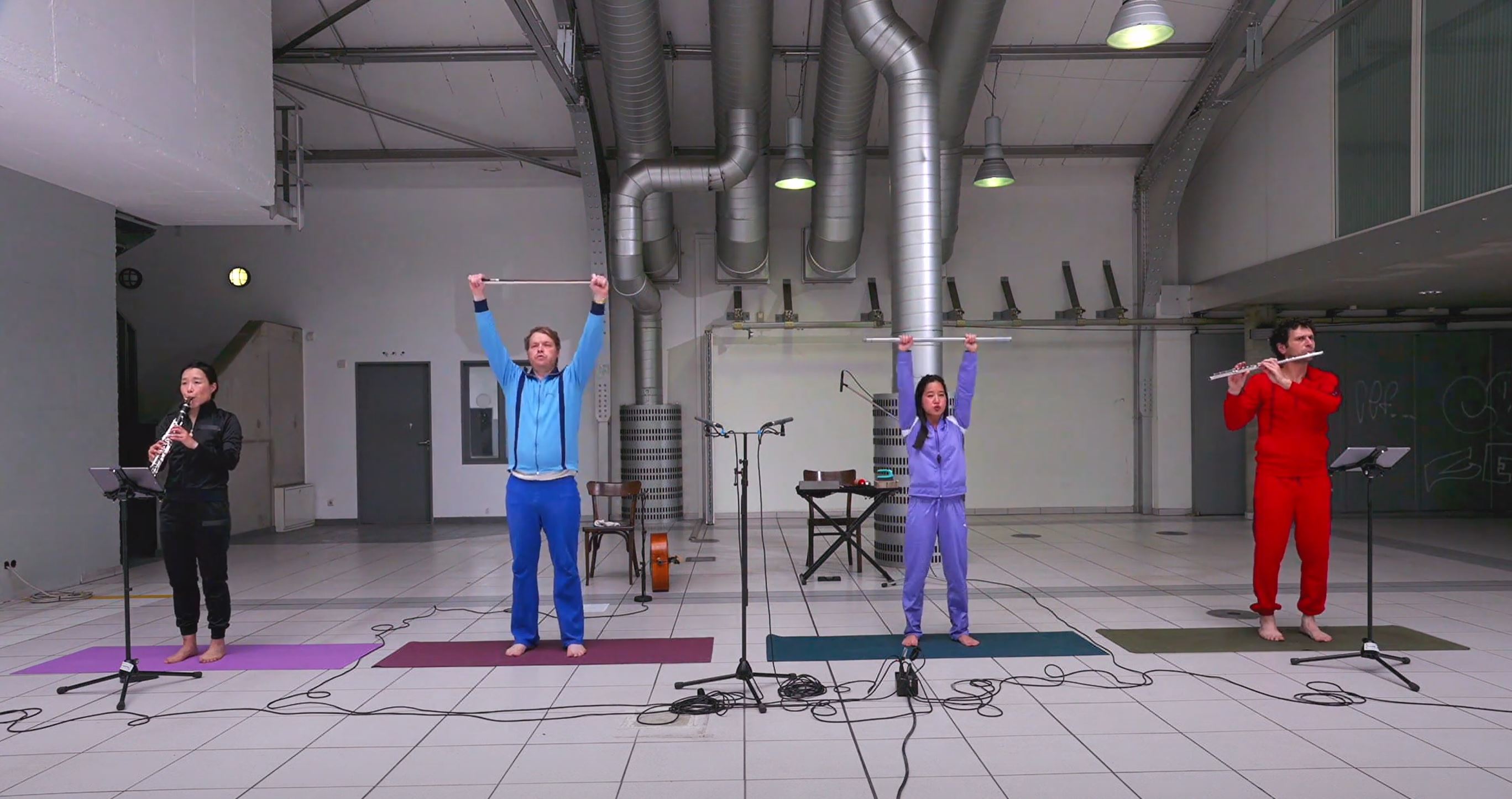
"The winner is..." for flute, clarinet, cello, small percussion instruments and movements (2021)
world premiere: Cologne, 05.06.2021/04.12.2021, hand werk
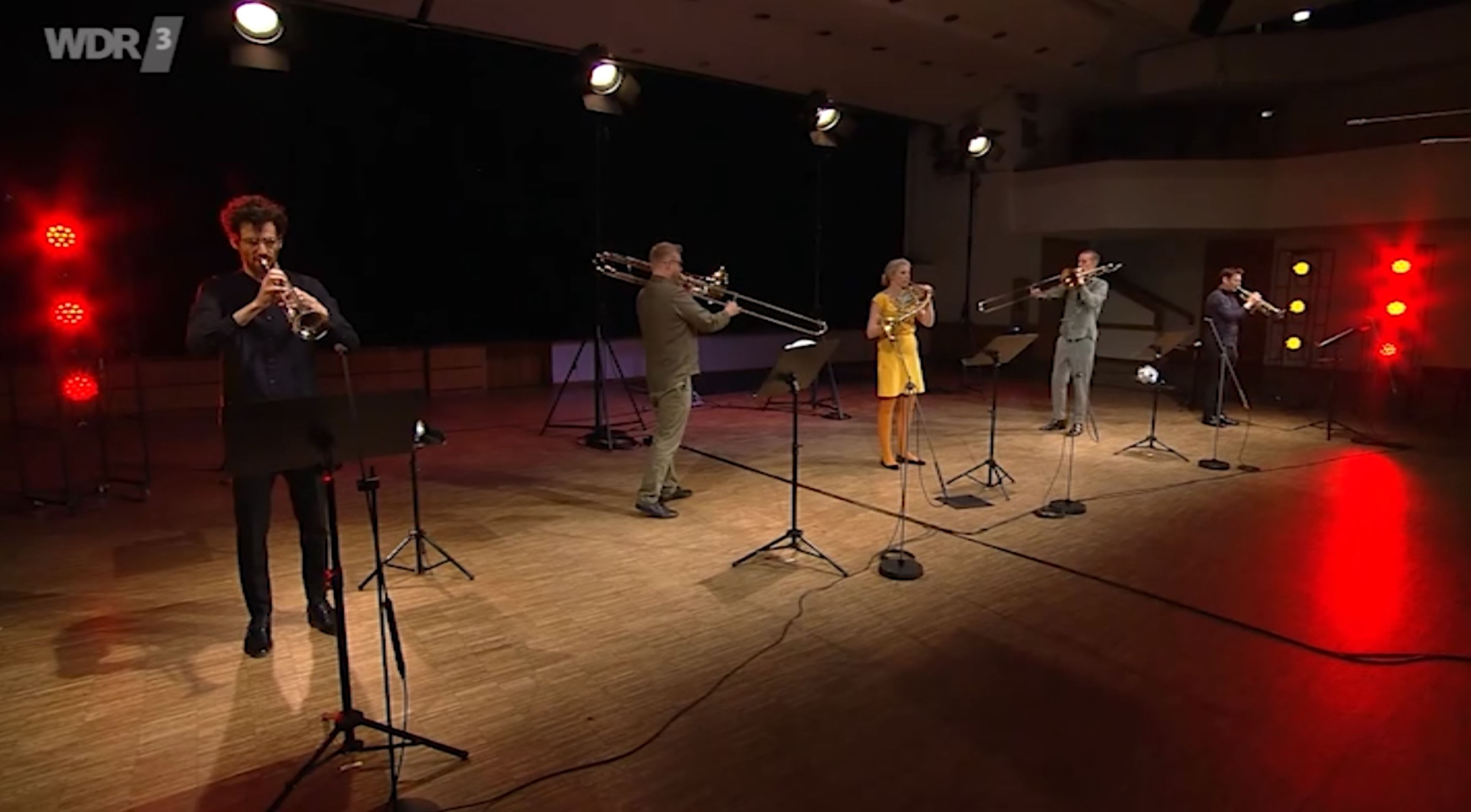
Zauberwürfel for brass quintet (2021)
2 tpt, 2 hn, tbn, b tbn
world premiere: Witten, 25.04.2021, Ensemble Schwerpunkt, Wittener Tage für neue Kammermusik
The piece is inspired by a Rubik’s Cube, the process of solving it, and the observation of various behaviors during the search for a solution. What is the Rubik’s Cube within a musical work? Who can turn it? Is our only goal to solve the Rubik’s Cube? What if we were part of this Rubik’s Cube?
The piece was commissioned by Westdeutscher Rundfunk for the Wittener Tage für neue Kammermusik 2021.
world premiere: Witten, 25.04.2021, Ensemble Schwerpunkt, Wittener Tage für neue Kammermusik
The piece is inspired by a Rubik’s Cube, the process of solving it, and the observation of various behaviors during the search for a solution. What is the Rubik’s Cube within a musical work? Who can turn it? Is our only goal to solve the Rubik’s Cube? What if we were part of this Rubik’s Cube?
The piece was commissioned by Westdeutscher Rundfunk for the Wittener Tage für neue Kammermusik 2021.
don't look for two violins, accordion, piano, percussion and electronics (2020)
world premiere: Warsaw, ATM, 23.09.2020, Formy Żeńskie: Barbara Mglej (violin), Paulina Woś-Gucik (violin), Martyna Zakrzewska (piano), Aleksandra Gołaj (percussion), Alena Budziňáková-Palus (accordion), Żaneta Rydzewska (electronics), Warsaw Autumn Festival
data processing for ensemble (2019)
fl/bfl, ob, cl/bcl, tpt, hn tbn, tba, perc (nicophone, waterphone, bd, timp, 2 singing bowls, saw, ratchet, marc, cuico, guiro small/medium), pno, vln I, vln II, vla, vc, db
world premiere: Cologne, HfMT Köln, 28.06.2019, Ensemble Musikfabrik, Clement Power (conductor)
data processing draws on Aldous Huxley’s idea that our experiences and emotions are inherently solitary, communicated only indirectly through symbols or language. The piece contrasts this notion with sounds drawn from nature—particularly frogs—which serve as the starting point for its musical material. These sounds are transformed and reimagined, oscillating between recognizable imitation and abstract reinterpretation, resulting in a multilayered sonic landscape that invites each listener’s individual perception.
world premiere: Cologne, HfMT Köln, 28.06.2019, Ensemble Musikfabrik, Clement Power (conductor)
data processing draws on Aldous Huxley’s idea that our experiences and emotions are inherently solitary, communicated only indirectly through symbols or language. The piece contrasts this notion with sounds drawn from nature—particularly frogs—which serve as the starting point for its musical material. These sounds are transformed and reimagined, oscillating between recognizable imitation and abstract reinterpretation, resulting in a multilayered sonic landscape that invites each listener’s individual perception.
"3/3" for saxophone, accordion and piano (2019)
world premiere: Warsaw, 16.05.2019,Alicja Wołyńczyk, Jarosław Gałuszka, Agnieszka Kopacka, Warszawskie Spotkania Muzyczne, Zamek Królewski
sit back and relax for piano, percussion, double bass, electronics and lights (2019)
world premiere: Cologne, 25.01.2019, Ensemble Musikfabrik, Adventure, HfMT Köln
sit back and relax for piano, percussion, double bass, electronics, and lights is clearly divided into two contrasting sections. The first part features calming, meditative structures that blend sustained sounds based on harmonic cents. The second part introduces lighting that rhythmically follows the energetic sound patterns, creating a dynamic and immersive contrast.
sit back and relax for piano, percussion, double bass, electronics, and lights is clearly divided into two contrasting sections. The first part features calming, meditative structures that blend sustained sounds based on harmonic cents. The second part introduces lighting that rhythmically follows the energetic sound patterns, creating a dynamic and immersive contrast.
under for clarinet, violoncello and piano (2018)
world premiere: Cologne, 08.09.20218, Trio Catch
The piece is based on the principle of musical recycling, utilizing a limited set of musical material that undergoes subtle transformations throughout the piece. This approach mirrors natural processes where limited resources are reused efficiently. The piece begins and ends with a performative ritual, where the musicians look downward, symbolizing the act of summoning and releasing the musical material from and into the depths. The title under reflects this connection to deep layers, possibly alluding to psychological depths as well.
The piece is based on the principle of musical recycling, utilizing a limited set of musical material that undergoes subtle transformations throughout the piece. This approach mirrors natural processes where limited resources are reused efficiently. The piece begins and ends with a performative ritual, where the musicians look downward, symbolizing the act of summoning and releasing the musical material from and into the depths. The title under reflects this connection to deep layers, possibly alluding to psychological depths as well.
spit it out for flute, clarinet, violin, viola and violoncello (2018)
world premiere: Witten, 27.04.2018, IEMA Ensemble, Wittener Tage für Neue Kammermusik, NewComer Concert
spit it out employs recorded samples of human speech in various languages as its point of departure. Each instrument functions as if a character in a conversation, and the listener is positioned like an anthropologist, attempting to discern the meaning emerging from the interaction between flute, clarinet, violin, viola, and cello.
spit it out employs recorded samples of human speech in various languages as its point of departure. Each instrument functions as if a character in a conversation, and the listener is positioned like an anthropologist, attempting to discern the meaning emerging from the interaction between flute, clarinet, violin, viola, and cello.
Torrent for alto saxophone, viola, accordion and live electronics (2017)
world premiere: Warsaw, 16.09.2017, Pablo Sanchez Escarische Gasch, Radosław Jarocki, Jędrzej Jarocki, Warsaw Autumn
Alone I for clarinet, violin, piano and percussion (2017)
world premiere: Warsaw, 17.12.2017, Kwartludium, UMFC
Hidden for clarinet, accordion, viola and percussion (2016)
world premiere: Warsaw, 21.09.2016, Mateusz Rajkowski, Jędrzej Jarocki, Radosław Jarocki, Tamara Kurkiewicz, Warsaw Autumn Festival
A complaint for soprano, clarinet, horn, piano and percussion (2016)
world premiere: Rotterdam, 05.09.2016, AKOM Ensemble
String quartet (2016)
world premiere: Warsaw, 23.09.2026, Two plus Two Quartet, Centrum Promocji Kultury Praga-Południe, Warsaw Autumn
Les mots se moquent de nous... for accordion and string quartet (2015)
world premiere: Warsaw, 19.02.2016, Miłosz Woliński, Adrianna Wadoń, Radosław Jarocki, Olga Chwaszczewska, Jędrzej Jarocki, UMFC
Winterwald for clarinet, accordion and percussion (2015)
world premiere: Konstanz, 27.11.2016, performers: Azra Ramić, Ina Callejas, Peer Kaliss, High Noon 2000+, Theater Konstanz
solo & duo
Le Petit Scandale for flute and clarinet (2023)
world premiere: Paris, 01.07.2023, Ensemble Intercontemporain, Manifeste, IRCAM
"Le Petit Scandale" explores emotional states inspired by Ligeti’s "Le Grand Macabre". The piece reflects a range of expressions such as crying, laughing, shouting, mumbling, moaning, and complaining. These emotional states shift rapidly, creating a dynamic dialogue that resembles a quarrel between the two instruments. The composition vividly captures the intensity and unpredictability of human interaction.
"Le Petit Scandale" explores emotional states inspired by Ligeti’s "Le Grand Macabre". The piece reflects a range of expressions such as crying, laughing, shouting, mumbling, moaning, and complaining. These emotional states shift rapidly, creating a dynamic dialogue that resembles a quarrel between the two instruments. The composition vividly captures the intensity and unpredictability of human interaction.
Hin und her for alto saxophone und cembalo (2022)
The piece was commisioned and written for Joaquín Sáez Belmonte and Natalia Lentas.
Forest Spectres for horn, light and electronics (2021)
Innerhalb for piano solo (2021)
world premiere: Berlin, 20.04.2021, Thibaut Surugue, Unerhörte Musik
Außerhalb der Zeit for organ solo (2021)
world premiere: Cologne, 02.07.2021, Dominik Susteck, Sankt Peter Kunst Station, comissioned by Deutschlandfunk
returns for clarinet and electronics (2019)
world premiere: Białystok, 27.09.2019, Żaneta Rydzewska, UMFC Białystok
circles for solo accordion (2018)
world premiere: Samobor (Croatia), 16.12.2018, Martina Jembrišak, Samobor Museum
Dauer for clarinet and electronics (2017)
world premiere: Warsaw, 08.01.2017, Żaneta Rydzewska, UMFC
after all for alto saxophone and piano (2017)
world premiere: Warsaw, 25.11.2018, Andrzej Karałow, Pablo Sanchez Escarische Gasch, II Polski Kongres Saksofonowy, UMFC
Tagtraum for clarinet and accordion (2017)
world premiere: Warsaw, 27.04.2017, Dziołak/Stankiewicz Duo, „Perspektywy”, AFK
Folla for viola and accordion (2016)
world premiere: Warsaw, 22.09.2017, Jarocki/ Rydz Duo, Warsaw Autumn, UMFC
SynEsthESiA for accordion solo (2014)
world premiere: Warsaw, 09.04.2015, Przemysław Wojciechowski, UMFC
"SynEsthESiA" unfolds in three movements that mirror different layers of consciousness and subconsciousness. The first, “Red,” represents the conscious layer, focused on E‑flat and A; the second, “Blue,” embodies the subconscious, centered around A, B, and E. The final movement, “Green,” synthesizes the two sound worlds, uniting them through G and E and reflecting the work’s idea of colors and psychological states blending into one another.
"SynEsthESiA" unfolds in three movements that mirror different layers of consciousness and subconsciousness. The first, “Red,” represents the conscious layer, focused on E‑flat and A; the second, “Blue,” embodies the subconscious, centered around A, B, and E. The final movement, “Green,” synthesizes the two sound worlds, uniting them through G and E and reflecting the work’s idea of colors and psychological states blending into one another.
WINDows for clarinet in E-flat (2014)
The piece was written for Agnieszka Dąbrowska-Kras.
multimedia
MySource video, dir. Agnieszka Mastalerz, MySource, CHPTR by Bites (2025)
Tunnelblick for ensemble, electronics, light and plant installation, AI video software (Birds on Mars) and video (2023/24)
b fl, b cl, t sax, tbn, sampler, vln, vla, vc, electronics, video, lighting, plant installation
world premiere: Cologne, 18.02.2024, electronic ID, Rufffactory Köln
"Tunnelblick" (music theater piece for ensemble, live electronics, lighting, and AI video installation — commission by Ensemble electronic ID).
"Tunnelblick" is an intermedia musical-theatrical work that intertwines empathy and artificial intelligence, inviting listeners to embark on a contemplative journey through the landscape of human–technology interaction. At its core, the piece probes the nature of empathy in a world increasingly dominated by technology. It serves as an audiovisual reflection on how our perception of reality shapes human behavior and questions whether exposure to overwhelming streams of information becomes toxic to our sense of self.
The concept of tunnel vision lies at the heart of "Tunnelblick" — a metaphor for humanity’s relentless single-minded pursuit of progress. The musical material explores the interplay between emotional states and the advancing realm of artificial intelligence, employing a pulsating blend of live instrumentation and electronics to embody the “heartbeat of progress”.
Visually and sonically, the piece integrates AI-generated video projections—produced in collaboration with Berlin-based AI studio Birds on Mars—and responsive lighting, establishing a dynamic dialogue between musicians and machine-generated imagery. A neural network trained on video and photographic data of flowers and Warsaw cityscapes is controlled in real time via contact with plants on stage.
In "Tunnelblick", music, visuals, and stage design merge to create an immersive environment that challenges preconceptions and invites critical reflection on the human condition in the age of technology and informational overload.
world premiere: Cologne, 18.02.2024, electronic ID, Rufffactory Köln
"Tunnelblick" (music theater piece for ensemble, live electronics, lighting, and AI video installation — commission by Ensemble electronic ID).
"Tunnelblick" is an intermedia musical-theatrical work that intertwines empathy and artificial intelligence, inviting listeners to embark on a contemplative journey through the landscape of human–technology interaction. At its core, the piece probes the nature of empathy in a world increasingly dominated by technology. It serves as an audiovisual reflection on how our perception of reality shapes human behavior and questions whether exposure to overwhelming streams of information becomes toxic to our sense of self.
The concept of tunnel vision lies at the heart of "Tunnelblick" — a metaphor for humanity’s relentless single-minded pursuit of progress. The musical material explores the interplay between emotional states and the advancing realm of artificial intelligence, employing a pulsating blend of live instrumentation and electronics to embody the “heartbeat of progress”.
Visually and sonically, the piece integrates AI-generated video projections—produced in collaboration with Berlin-based AI studio Birds on Mars—and responsive lighting, establishing a dynamic dialogue between musicians and machine-generated imagery. A neural network trained on video and photographic data of flowers and Warsaw cityscapes is controlled in real time via contact with plants on stage.
In "Tunnelblick", music, visuals, and stage design merge to create an immersive environment that challenges preconceptions and invites critical reflection on the human condition in the age of technology and informational overload.
Soma for multi-channel audio playback (Ambisonics 3rd) (2023)
Soma
for multichannel electronics (Dolby Atmos / Ambisonics 3rd order)
world premiere: Warsaw, 19.01.2024, UMFC, Dolby Atmos, CU Cinema ("Kino dźwięku")
The piece transforms field recordings and elements of musique concrète into immersive, rhythmic textures. It explores the perception of space and movement in sound, creating a sonic environment that envelops the listener.
world premiere: Warsaw, 19.01.2024, UMFC, Dolby Atmos, CU Cinema ("Kino dźwięku")
The piece transforms field recordings and elements of musique concrète into immersive, rhythmic textures. It explores the perception of space and movement in sound, creating a sonic environment that envelops the listener.
Plath theater play, dir. Katarzyna Kalwat, Teatr Studio (2022)

 photos:© Natalia Kabanow
Corrida film, dir. Piotr Karolak (2022)
Ostatnie Dni Lata film, dir. Klaudia Kęska (2020)
"Ciało-proces" theater play, dir. Pamela Leończyk (2019)
world premiere: 19.05.2019, Grand Prix award at the 20th National Independent Theatre Festival in Ostrów Wielkopolski
"Nocny lot" dir. Agnieszka Mastalerz (2019)
world premiere: 26.04.2019, Galeria Sztuki im. Jana Tarasina, Kalisz
#bawsiedobrze sound installation with Dorota Błaszczak, Teoniki Rożynek, Wiktor Gniazdowski, Bartłomiej Majewicz, Emil Rymanowicz, UMFC (2019)
“bawsiedobrze” is an interactive installation that analyzes the movements of the participant (listener) and generates composed sounds that transform in real time based on their gestures. Participants are encouraged to dance specific choreographed sequences within marked areas on the floor. By following these movements, they can decode and reconstruct a hidden musical composition embedded in the installation. The work is powered by Kinect technology, which enables precise motion tracking and sound modulation.
no-body for ensemble, video, lighting, electronics and scents (2018)
world premiere: Warsaw, 25.09.2018, Delirium Ensemble, Nowy Teatr, Warsaw Autumn Festival
no-body is a multisensory installation combining scents and visuals, creating an immersive experience. Performers are enclosed within a white fabric cube, onto which video mapping is projected, enhancing the spatial and sensory atmosphere.
no-body is a multisensory installation combining scents and visuals, creating an immersive experience. Performers are enclosed within a white fabric cube, onto which video mapping is projected, enhancing the spatial and sensory atmosphere.
"H.Rekonstrukcja" dir. Agnieszka Mastalerz (2018)
world premiere: Wrocław, 28.06-02.07.2019, 17th Survival Performance Art Festival, Pod Ciśnieniem
so forth for viola, performer, video, live video transmission and electronics (2018)
world premiere: Tampere, 13.04. 2018, Annegret Mayer-Lindenberg (viola, performer), Brigitta Muntendorf (performer) - Ensemble Garage, (Żaneta Rydzewska, electronics), Tampere Biennale, Finland
"so-forth" explores the experience of being constantly observed in the digital age, overwhelmed by sensory overload. It also reflects on the reciprocal nature of observation — how we, too, watch others, creating a complex web of surveillance and interaction.
"so-forth" explores the experience of being constantly observed in the digital age, overwhelmed by sensory overload. It also reflects on the reciprocal nature of observation — how we, too, watch others, creating a complex web of surveillance and interaction.
music theater
Tunnelblick for ensemble, electronics, light and plant installation, AI video software (Birds on Mars) and video (2023/24)
b fl, b cl, t sax, tbn, sampler, vln, vla, vc, electronics, video, lighting, plant installation
world premiere: Cologne, 18.02.2024, electronic ID, Rufffactory Köln
Tunnelblick (music theater piece for ensemble, live electronics, lighting, and AI video installation — commission by Ensemble electronic ID).
Tunnelblick is an intermedia musical-theatrical work that intertwines empathy and artificial intelligence, inviting listeners to embark on a contemplative journey through the landscape of human–technology interaction. At its core, the piece probes the nature of empathy in a world increasingly dominated by technology. It serves as an audiovisual reflection on how our perception of reality shapes human behavior and questions whether exposure to overwhelming streams of information becomes toxic to our sense of self.
The concept of tunnel vision lies at the heart of Tunnelblick — a metaphor for humanity’s relentless single-minded pursuit of progress. The musical material explores the interplay between emotional states and the advancing realm of artificial intelligence, employing a pulsating blend of live instrumentation and electronics to embody the “heartbeat of progress”.
Visually and sonically, the piece integrates AI-generated video projections—produced in collaboration with Berlin-based AI studio Birds on Mars—and responsive lighting, establishing a dynamic dialogue between musicians and machine-generated imagery. A neural network trained on video and photographic data of flowers and Warsaw cityscapes is controlled in real time via contact with plants on stage.
In Tunnelblick, music, visuals, and stage design merge to create an immersive environment that challenges preconceptions and invites critical reflection on the human condition in the age of technology and informational overload.
world premiere: Cologne, 18.02.2024, electronic ID, Rufffactory Köln
Tunnelblick (music theater piece for ensemble, live electronics, lighting, and AI video installation — commission by Ensemble electronic ID).
Tunnelblick is an intermedia musical-theatrical work that intertwines empathy and artificial intelligence, inviting listeners to embark on a contemplative journey through the landscape of human–technology interaction. At its core, the piece probes the nature of empathy in a world increasingly dominated by technology. It serves as an audiovisual reflection on how our perception of reality shapes human behavior and questions whether exposure to overwhelming streams of information becomes toxic to our sense of self.
The concept of tunnel vision lies at the heart of Tunnelblick — a metaphor for humanity’s relentless single-minded pursuit of progress. The musical material explores the interplay between emotional states and the advancing realm of artificial intelligence, employing a pulsating blend of live instrumentation and electronics to embody the “heartbeat of progress”.
Visually and sonically, the piece integrates AI-generated video projections—produced in collaboration with Berlin-based AI studio Birds on Mars—and responsive lighting, establishing a dynamic dialogue between musicians and machine-generated imagery. A neural network trained on video and photographic data of flowers and Warsaw cityscapes is controlled in real time via contact with plants on stage.
In Tunnelblick, music, visuals, and stage design merge to create an immersive environment that challenges preconceptions and invites critical reflection on the human condition in the age of technology and informational overload.
Roast for performer (composer) solo (2023)
world premiere: Warsaw, 19.12.2023, Centrum Sztuki Współczesnej
performer: Żaneta Rydzewska
music, electronics: Żaneta Rydzewska
light: Żaneta Rydzewska
The piece "Roast" for solo performer is a composition that explores the composer’s inner critical voice, as well as the way a composer can be perceived by others. In this work, I mock myself and punish myself, assigning exercises as penance for supposed mistakes and faults.
performer: Żaneta Rydzewska
music, electronics: Żaneta Rydzewska
light: Żaneta Rydzewska
The piece "Roast" for solo performer is a composition that explores the composer’s inner critical voice, as well as the way a composer can be perceived by others. In this work, I mock myself and punish myself, assigning exercises as penance for supposed mistakes and faults.
Fanfare for flute, violin, percussion and piano (2022)
world premiere: Cologne, 09.01.2023, Studio Ensemble Musikfabrik
Ensemble Musikfabrik:
Helen Bledsoe, flute
Benjamin Kobler, piano
Dirk Rothbrust, percussion
Hannah Weirich, violin
Ensemble Musikfabrik:
Helen Bledsoe, flute
Benjamin Kobler, piano
Dirk Rothbrust, percussion
Hannah Weirich, violin
to my stars for ensemble (2021)
group I (E – Earthlings): fl/bfl, accordion, perc, vln, vc, db
group II (A – Astronauts): cl I, cl II, hn, tpt, tbn, bass tbn
world premiere: Vienna, 30.07.2021, Klangforum Wien, Johannes Kalitze (conductor), ImPuls Tanz Festival, Theater Odeon
The concept behind the piece is inspired by the novel Return from the Stars by Stanisław Lem. The book’s main protagonist Bregg, an astronaut, returns to our planet after 127 Earth years only to find the globe alien to him. On Earth, a perfectly designed social system is in place; this is the result of “betrisation”, a process that renders the psyche incapable of aggression, fighting, or taking risks. The astronaut, although abandoned by his interstellar travel companions after all, sets out to discover a communal and mental space for himself to function in on the now foreign planet... I have therefore chosen four subjects of the novel as the vehicles for my piece. First, the attempt to face the consequences of Einstein’s twin paradox—that is, to adapt to life on the planet as found 127 years later. Second, the need for a sense of community and the related problem of alienation. Third, introducing “betrisation” and examining an egalitarian and ant colony-like society, where a universal and equal measure of well-being counts the most—even if it costs people their ability to experience the world in metaphysical terms. And fourth, the struggle with self and with one’s own nature, pursued in foreign realms that reflect our personal issues like distorting mirrors. Essential to the musical and stage-wise organisation of the piece is the splitting up of the ensemble into two groups of six: Group A—the Astronauts and Group E—the Earthlings. The piece consists of six movements/acts.
Żaneta Rydzewska
group II (A – Astronauts): cl I, cl II, hn, tpt, tbn, bass tbn
world premiere: Vienna, 30.07.2021, Klangforum Wien, Johannes Kalitze (conductor), ImPuls Tanz Festival, Theater Odeon
The concept behind the piece is inspired by the novel Return from the Stars by Stanisław Lem. The book’s main protagonist Bregg, an astronaut, returns to our planet after 127 Earth years only to find the globe alien to him. On Earth, a perfectly designed social system is in place; this is the result of “betrisation”, a process that renders the psyche incapable of aggression, fighting, or taking risks. The astronaut, although abandoned by his interstellar travel companions after all, sets out to discover a communal and mental space for himself to function in on the now foreign planet... I have therefore chosen four subjects of the novel as the vehicles for my piece. First, the attempt to face the consequences of Einstein’s twin paradox—that is, to adapt to life on the planet as found 127 years later. Second, the need for a sense of community and the related problem of alienation. Third, introducing “betrisation” and examining an egalitarian and ant colony-like society, where a universal and equal measure of well-being counts the most—even if it costs people their ability to experience the world in metaphysical terms. And fourth, the struggle with self and with one’s own nature, pursued in foreign realms that reflect our personal issues like distorting mirrors. Essential to the musical and stage-wise organisation of the piece is the splitting up of the ensemble into two groups of six: Group A—the Astronauts and Group E—the Earthlings. The piece consists of six movements/acts.
Żaneta Rydzewska
"The winner is..." for flute, clarinet, cello, small percussion instruments and movements (2021)
world premiere: Cologne, 05.06.2021/04.12.2021, hand werk
Zauberwürfel for brass quintet (2021)
2 tpt, 2 hn, tbn, b tbn
world premiere: Witten, 25.04.2021, Ensemble Schwerpunkt, Wittener Tage für neue Kammermusik
The piece is inspired by a Rubik’s Cube, the process of solving it, and the observation of various behaviors during the search for a solution. What is the Rubik’s Cube within a musical work? Who can turn it? Is our only goal to solve the Rubik’s Cube? What if we were part of this Rubik’s Cube?
The piece was commissioned by Westdeutscher Rundfunk for the Wittener Tage für neue Kammermusik 2021.
world premiere: Witten, 25.04.2021, Ensemble Schwerpunkt, Wittener Tage für neue Kammermusik
The piece is inspired by a Rubik’s Cube, the process of solving it, and the observation of various behaviors during the search for a solution. What is the Rubik’s Cube within a musical work? Who can turn it? Is our only goal to solve the Rubik’s Cube? What if we were part of this Rubik’s Cube?
The piece was commissioned by Westdeutscher Rundfunk for the Wittener Tage für neue Kammermusik 2021.
"where" a music theater piece for violin, two violas and objects (2019)
world premiere: Cologne, Sankt Peter Kunst Station, 20.11.2019, violin: Lola Rubio, violas: Pauline Buss, Laura Hovestadt


 photos: © Dörthe Boxberg
so forth for viola, performer, video, live video transmission and electronics (2018)
world premiere: Tampere, 13.04. 2018, Annegret Mayer-Lindenberg (viola, performer), Brigitta Muntendorf (performer) - Ensemble Garage, (Żaneta Rydzewska, electronics), Tampere Biennale, Finland
"so-forth" explores the experience of being constantly observed in the digital age, overwhelmed by sensory overload. It also reflects on the reciprocal nature of observation — how we, too, watch others, creating a complex web of surveillance and interaction.
"so-forth" explores the experience of being constantly observed in the digital age, overwhelmed by sensory overload. It also reflects on the reciprocal nature of observation — how we, too, watch others, creating a complex web of surveillance and interaction.
voice
Vor lauterm Lärm for soprano, flute, clarinet, viola and double bass (2023)
soprano, flute, clarinet, viola, double bass
world premiere: Berlin, 28.09.2023, Novoflot Ensemble, Akademie der Künste
The piece explores the boundaries between acoustic perception and urban noise. Written for soprano, flute, clarinet, viola, and double bass, it forms a part of Novoflot’s large-scale opera-installation *“The Theory of Harmony #2 – OpernCall”*, performed on the façade of the Akademie der Künste in Berlin.
Text by Ulrich Holbein.
Commissioned by Novoflot and produced in collaboration with Akademie der Künste.
world premiere: Berlin, 28.09.2023, Novoflot Ensemble, Akademie der Künste
The piece explores the boundaries between acoustic perception and urban noise. Written for soprano, flute, clarinet, viola, and double bass, it forms a part of Novoflot’s large-scale opera-installation *“The Theory of Harmony #2 – OpernCall”*, performed on the façade of the Akademie der Künste in Berlin.
Text by Ulrich Holbein.
Commissioned by Novoflot and produced in collaboration with Akademie der Künste.
Lass mich for soprano and piano (2022)
world premiere: Würzburg, 16.10.2022, Theresa Maria Romes, Marie-Thérèse Zahnlecker, KAMMERMUSIK! Festival Würzburg
Weź mnie for soprano, piano and percussion (2021)
world premiere: Warsaw, 25.09.2021, Ko-Mat Ensemble, Aleksandra Ołdak, "Lalki", text: Marcin Zdunik, Warsaw Autumn, Komuna Warszawa
A complaint for soprano, clarinet, horn, piano and percussion (2016)
world premiere: Rotterdam, 05.09.2016, AKOM Ensemble
Gestern ist sie von mir gegangen... for baritone and piano (2015)
world premiere: Kraków, 09.04.2016, Sebastian Szumski, Krzysztof Augustyn, Academy of Music in Kraków, text: Stanisław Przybyszewski
improvisation
ets #3 for bass clarinet and electronics
ets #2 for clarinet and electronics
ets #1 for clarinet and electronics
"error" for three performers, objects and electronics (with Teoniki Rożynek and Aleksandra Kaca) (2019)